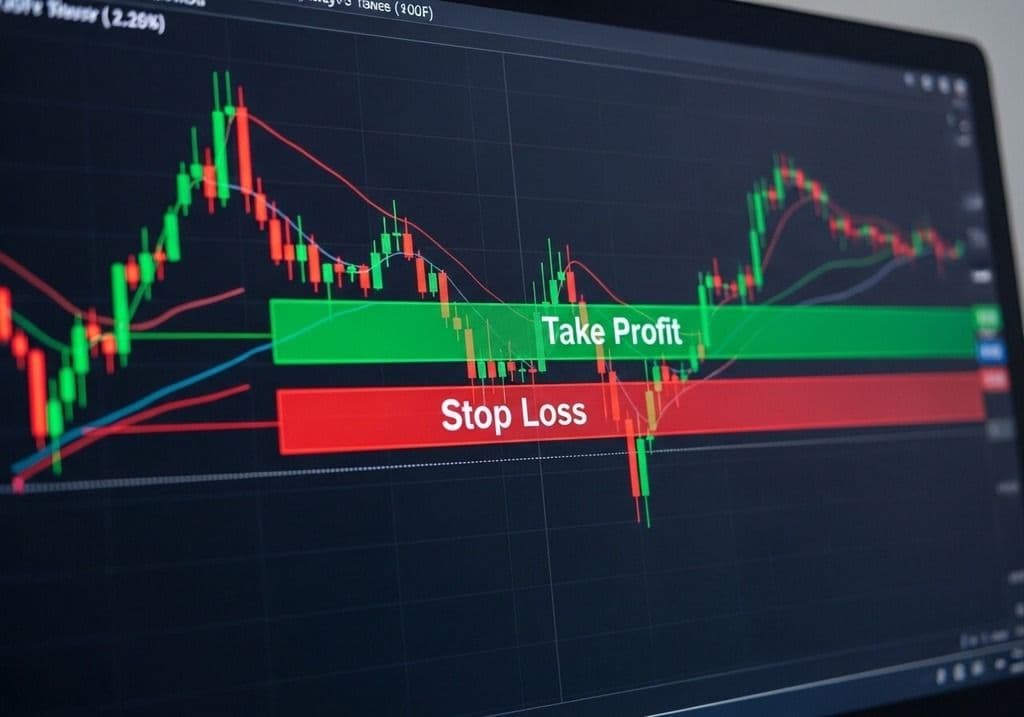
Introduction
Overview of Forex Trading
Forex trading, also known as foreign exchange or FX trading, involves the buying and selling of currency pairs to capitalize on fluctuations in exchange rates. Traders utilize various strategies and tools to navigate the dynamic FX market, which is known for its high liquidity and 24-hour trading opportunities.
Importance of Understanding Key Terms
Grasping key terms is crucial in forex trading, as it helps in effective decision-making and risk management. Among these terms, Stop Loss (SL) and Take Profit (TP) are fundamental concepts that every trader must comprehend to safeguard their investments and maximize returns.
What Does SL Mean?
Definition of SL (Stop Loss)
A Stop Loss (SL) order is an instruction to your broker to automatically close a trade when it reaches a predetermined price level, thereby limiting your potential losses. Its primary function is to protect your trading capital from significant downturns in the market, acting as a safety net against unexpected price movements.
Purpose of Stop Loss
A Stop Loss (SL) order is an essential tool designed to automatically close a losing trade at a predetermined price level. Its primary purpose is to limit your potential losses on a trade, acting as a safety net to protect your trading capital from significant downturns. By setting an SL, you pre-define the maximum amount you are willing to lose on a particular transaction, thereby preventing emotional decision-making during volatile market movements.
Types of Stop Loss Orders
Fixed Stop Loss
A Fixed Stop Loss is set at a specific price level and remains unchanged regardless of market movements. It is a straightforward method and offers clarity on the maximum potential loss for a trade.
Trailing Stop Loss
A Trailing Stop Loss, on the other hand, adjusts with favorable market movements. It follows the market price at a pre-defined distance, thus locking in profits while limiting risks.
How to Set a Stop Loss
Percentage Method
This method involves setting a Stop Loss at a certain percentage away from the entry price. For instance, if you set a 2% Stop Loss on a trade, the position will be closed if the price moves 2% against your favor.
Volatility Method
In the Volatility Method, SL is set based on the market’s volatility. Indicators like Average True Range (ATR) can help determine an appropriate level, taking into account recent price swings.
Common Mistakes to Avoid
- Setting SL too close to the entry price, leading to premature exits.
- Ignoring market volatility when setting SL levels.
- Moving SL levels to hold onto losing positions, a practice known as ‘Stop Loss Hunting’.
What Does TP Mean?
Definition of TP (Take Profit)
Take Profit (TP) is a predetermined price level at which a trader instructs their chosen broker to close a position to secure profits.
Purpose of Take Profit
Following the protective nature of the Stop Loss (SL), the Take Profit (TP) order serves as its counterpart, designed to lock in gains. A Take Profit order is an instruction to a broker to automatically close a trade when it reaches a predetermined profit level. Its core purpose is to secure profits by exiting a winning trade at a favorable price, preventing the potential reversal of market conditions from eroding unrealized gains. By setting a TP, traders can ensure that their successful trades translate into actual profits without requiring constant market monitoring.
Types of Take Profit Orders
Fixed Take Profit
A Fixed Take Profit order is set at a specific price level and remains unchanged irrespective of market conditions. It provides clarity on the expected profit for a trade.
Dynamic Take Profit
A Dynamic Take Profit adapts according to market movements, potentially maximizing gains as it moves in one’s favor. It can be set using technical indicators that forecast price trends.
How to Set a Take Profit
Risk-to-Reward Ratio
A common approach is to set TP based on the Risk-to-Reward ratio. For instance, if you risk $100 on a trade, a 1:3 ratio would suggest taking profit at $300.
Technical Indicators
Indicators like Fibonacci retracement levels, moving averages, and resistance zones can aid in determining optimal TP levels.
The Relationship Between SL and TP
Importance of Setting Both
Setting both SL and TP is essential for a balanced trading strategy. While SL mitigates risk, TP ensures profits are collected systematically, contributing to a disciplined trading approach.
Example of a Trade with SL and TP
Imagine you buy the EUR/USD pair at 1.1000 with an SL at 1.0950 and a TP at 1.1100. If the price falls to 1.0950, your SL order triggers, capping your loss at 50 pips. Conversely, if the price rises to 1.1100, your TP order triggers, securing a profit of 100 pips.
Common Mistakes and Best Practices for Beginners
Beginners often make the mistake of setting their Stop Loss (SL) too tight, leading to premature exits, or too wide, risking excessive capital loss. Similarly, Take Profit (TP) orders can be set unrealistically high, missing achievable gains.
Key Mistakes to Avoid:
- Ignoring Volatility: Setting fixed SL/TP levels without considering market fluctuations.
- Emotional Trading: Adjusting SL/TP based on hope or fear rather than strategy.
- Over-reliance on Fixed Ratios: Blindly applying risk-reward ratios without market context.
Best Practices:
- Use Technical Analysis: Base SL/TP on support/resistance levels, chart patterns, or average true range (ATR).
- Define Your Risk: Determine your acceptable loss per trade before entering.
- Be Consistent: Stick to your pre-defined strategy and avoid impulsive changes.
Key Mistakes to Avoid When Using SL and TP in Forex Trading
Beginners often fall into several traps when implementing Stop Loss (SL) and Take Profit (TP) orders. A common mistake is setting these orders too tightly, which can lead to being prematurely stopped out of a profitable trade due to normal market fluctuations. Conversely, setting them too wide can expose your capital to excessive risk if the trade moves against you.
Another pitfall is the emotional adjustment of SL/TP levels after a trade has been initiated. This often stems from fear or greed, overriding the initial, objective trading plan. Furthermore, failing to set SL and TP orders at all is a critical error, leaving trades vulnerable to unlimited losses or missed profit opportunities. It’s also crucial to understand that SL and TP levels are not static; they should be reviewed and adjusted based on evolving market conditions and trade progression, but only with a clear, predefined strategy, not on impulse.
Integrating SL and TP for a Robust Trading Strategy
To build a robust trading strategy, SL and TP must function as a cohesive unit rather than isolated safety nets. A professional approach involves calculating your risk-reward ratio before entering any position. By aligning your exit points with your technical analysis, you remove the guesswork from trade management. Consider these pillars for integration:
- Consistency: Apply the same logic to every trade to gather reliable performance data.
- Automation: Use platform features to set orders immediately upon entry to prevent emotional interference.
- Dynamic Adjustment: Only move your stop loss to break-even once your trade has moved significantly in your favor.
Conclusion
Recap of Key Terms
In summary, understanding and effectively utilizing Stop Loss (SL) and Take Profit (TP) orders are pivotal in forex trading. SL protects against excessive losses while TP locks in profits, ensuring harmony between risk and reward.
Final Thoughts on Using SL and TP in Trading
Incorporating SL and TP orders into your trading strategy fosters discipline, mitigates emotional trading decisions, and promotes consistent profitability. By mastering these tools, traders can navigate the forex market with greater confidence and success.
FAQ: Meaning of SL and TP in Forex Trading
FAQ 1: What does SL mean in forex trading?
SL stands for “Stop Loss” in forex trading. It’s an automated order that closes your trade when the price moves against you by a specified amount. A Stop Loss helps limit your potential losses and protects your trading account from significant drawdowns. For example, if you buy EUR/USD at 1.1000 and set an SL at 1.0950, your trade will automatically close if the price drops to that level, limiting your loss.
FAQ 2: What does TP mean in forex trading?
TP stands for “Take Profit” in forex trading. It’s an order that automatically closes your position when the price reaches your desired profit target. Unlike Stop Loss which limits losses, Take Profit locks in your gains by exiting the trade at a predetermined profitable level. For instance, if you buy a currency pair at 1.1000 and set a TP at 1.1100, your trade will close automatically when that profit target is reached.
FAQ 3: Do I need to use both SL and TP on every trade?
While not mandatory, using both SL and TP is highly recommended for disciplined trading and proper risk management. Stop Loss protects you from excessive losses, while Take Profit ensures you capture gains without getting greedy. Together, they help you maintain a consistent risk-reward ratio and remove emotional decision-making from your trading. Most professional traders never enter a trade without setting both levels.
FAQ 4: Can I change my SL and TP after opening a trade?
Yes, you can modify your Stop Loss and Take Profit levels after opening a trade on most forex trading platforms. This allows you to adjust your risk management strategy as market conditions change. For example, you might move your SL to break-even once the trade is profitable, or adjust your TP based on new market analysis. However, avoid changing these levels impulsively or based on emotions rather than your trading plan.